Vigor Mahjong
- 4.8
- Rating
- 1.00M
- Installs
- Free
- Price

 Analysis by App-foxy
I approached Vigor Mahjong as the kind of game you open when you want something quiet, focused, and easy to understand within seconds. It is a free board game from CanaryDroid, built around tile matching and mahjong solitaire rather than competition, long tutorials, or a complicated story. That simple purpose is its biggest strength: I can start a round quickly, study the layout, and play at my own pace.
The important question is not whether this is a large, feature-heavy game. It is not. The better question is whether you want a straightforward tile puzzle that fits naturally into short breaks. If you enjoy scanning patterns, planning a few moves ahead, and clearing a board without pressure, this is a comfortable choice. If you are looking for online opponents, a deep campaign, or a constantly changing collection of game modes, you may feel that it stays too close to the traditional format.
What I considered before recommending it
My first test was how quickly the game communicates its purpose. Vigor Mahjong does not need much explanation because the familiar solitaire structure is immediately readable: tiles are arranged on a board, and the goal is to match suitable pairs while working through the layout. That makes it approachable for someone who has never spent much time with mahjong games, while still leaving room for careful decision-making.
You May Also Like

 Blood Strike: 2.5 Anniversary
Blood Strike’s Loadouts Turn Every Drop Into a Tactical Gamble
A close look at Blood Strike’s custom loadouts: how fast access to signature weapons reshapes its battle royale rhythm, rewards preparation, and narrows the gap between fights.

 Pandora - Music & Podcasts
Pandora’s Music Is Easy to Start, but Harder to Recover
Pandora’s strength is its low-effort path from a seed to a station. Its weak spot is how much confidence it asks you to place in connection, setup, and quiet recovery.

 8 Ball Pool
 Is Built on Rivalries, Rematches, and Routine
A close look at the rivalries, rematches, shared routines, and unanswered safety questions that turn a quick pool match into a persistent mobile community.

 Samsung Music
’s Quiet Strength Is Playing What You Already Own
Its reach comes less from spectacle than from dependable access to a personal library. That simplicity is both the app’s strongest retention engine and its ceiling.

 AccuWeather: Weather Radar
AccuWeather Review: A Quick, Clear Forecast for Everyday Decisions
For everyday plans, the best forecast is the one you can understand quickly. AccuWeather makes rain timing, radar, and local conditions easy to act on, with a few trade-offs.

 Hill Climb Racing
Why Hill Climb Racing Still Turns Crashes Into One More Run
A tiny car, a bumpy hill and one more upgrade: Hill Climb Racing keeps resurfacing because its simple chaos makes every near-miss feel personal.
More From Our News Desk



I also paid attention to the rhythm of play. A good mobile board game should let me make progress without demanding a large uninterrupted session. This one suits that pattern well. I can play for a few minutes, pause mentally between moves, and return when I have time. The experience is more reflective than frantic, which makes it a natural fit for a commute, a waiting room, or a quiet evening when I do not want a demanding action game.
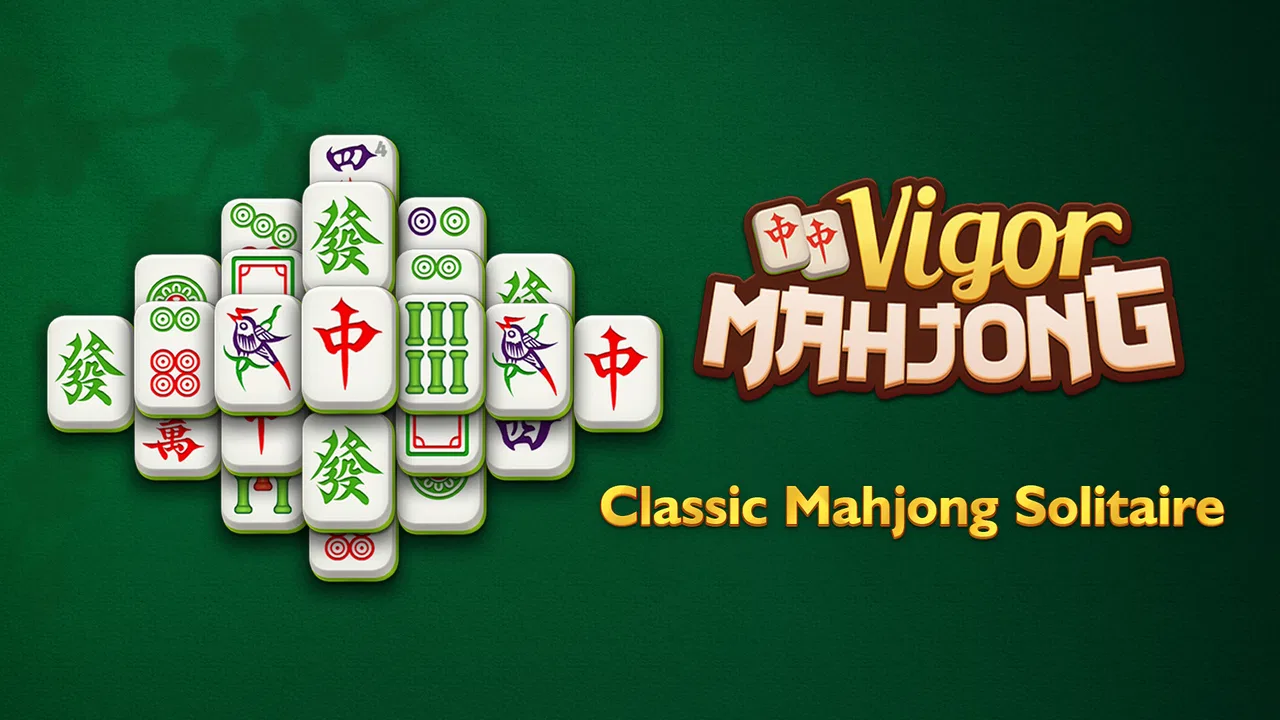
Another decision point is visual readability. Tile-matching games live or die by how easily I can distinguish pieces and recognize available choices. The large-tile focus is useful here because it puts the board itself at the center of the experience. I spend less effort trying to interpret tiny symbols and more time thinking about which match will open the next useful path. That matters especially on a phone, where a dense layout can otherwise become tiring.
There is also a difference between a game that is relaxing and one that is merely slow. In my experience, the traditional structure gives Vigor Mahjong a steady mental pace. I am not waiting for another player, reacting to a timer, or managing a complicated inventory. The challenge comes from reading the board and avoiding moves that leave awkward tiles behind. That is a modest kind of strategy, but it is enough to keep the session from feeling like automatic tapping.
The game is rated for Everyone, which matches its accessible presentation and uncomplicated premise. I would still describe it as better suited to people who enjoy visual puzzles than to very young players who need constant novelty. The rules are easy to grasp, but making good choices can require patience. That combination makes it useful as a casual family-friendly option, although the appeal will depend more on a person’s interest in solitaire puzzles than on age alone.
Why the large-tile approach helps in real play
The most practical strength is that the tile layout encourages me to inspect the board before acting. In many matching games, the temptation is to tap the first obvious pair. Here, a better habit is to look for matches that expose covered or blocked pieces. A pair that is immediately available may be less valuable than one that opens several future choices. This gives the game a small but meaningful layer of planning without turning it into a technical strategy title.
I found that the best way to play is to divide the board into zones. I first look for pairs that remove pieces from the highest or most restrictive areas, then check whether the move reveals something useful underneath. This is a simple workflow, but it prevents the common mistake of clearing easy pairs while leaving the central structure untouched. The game does not need a complicated system to reward this kind of attention; the board itself supplies the decision-making.
A second useful habit is to avoid treating every visible match as equally good. When several pairs are available, I compare what each one will expose. If one choice creates two new possibilities and another only removes tiles from an already open area, I usually prefer the first. This makes the experience feel more deliberate and gives experienced puzzle players a reason to keep improving even when the basic rules remain familiar.
That is one of the non-obvious reasons I can see the game working as a short concentration exercise. It asks me to slow down, hold several possible outcomes in mind, and resist the urge to make the quickest move. I would not call it a full brain-training program, and I would not use it as a substitute for a broader puzzle collection, but it does provide a focused mental break rather than empty swiping.
Where it fits better than busier alternatives
Vigor Mahjong wins when I want a recognizable game loop without social pressure. Compared with competitive board games, it does not ask me to learn an opponent’s habits or worry about losing because another person played better. Compared with card battlers or strategy games, it avoids decks, upgrades, resource systems, and long-term planning outside the current board. That makes it easier to recommend to someone who wants a calm puzzle instead of a second job on their phone.
It also has an advantage over many novelty-driven casual games: the basic activity does not become dependent on a joke, a story, or a temporary event. The appeal comes from arranging and clearing tiles. If that core activity suits you, the game can remain useful whenever you want the same familiar kind of focus. The trade-off is equally clear, though. Players who need frequent surprises may find the traditional format repetitive sooner than they would with a broader board-game collection.
The free price lowers the barrier to trying it. I can install it without planning a purchase, test the central gameplay, and decide from personal experience whether tile solitaire belongs in my regular rotation. That is especially helpful for casual players who do not want to commit to a paid puzzle before knowing whether the pace feels right. Free does not automatically make a game good, but here it supports the app’s role as an easy, low-commitment option.
The audience response also suggests that the format is connecting with a substantial number of players: it carries an average rating of 4.8 from around 113 thousand ratings, with more than a million installs. I treat those figures as a sign of broad appeal rather than proof that every player will enjoy it. A high score cannot change the fact that the game is intentionally focused. Someone seeking multiplayer interaction or a large variety of mechanics should judge it by those needs, not by popularity alone.
Small techniques that make the game more satisfying
My first practical tip is to scan before tapping. I look for pairs that are partially buried, surrounded, or positioned where their removal can change the board. This takes only a moment, but it turns the session from reflex matching into a sequence of choices. When I am tired, I sometimes forget this and clear the easiest pair first; the board then feels less flexible, even though I technically made a valid move.
My second tip is to keep track of duplicate possibilities. If I can see several copies of a symbol or pattern, I try to remember which ones are currently usable and which ones are trapped. Matching the wrong available pair may leave the remaining pieces in an inconvenient arrangement. I do not need to memorize the entire board, but noticing repeated symbols before they disappear helps me avoid creating a dead end for myself.
A third insight is that large tiles are not only an accessibility benefit; they change how I plan. Because the board is easier to inspect, I can spend more attention on order rather than recognition. That makes the game a better fit for deliberate play on a phone than a visually cramped mahjong layout would be. The benefit is strongest when I hold the device at a comfortable distance and give myself a few seconds to read the whole arrangement.
For an everyday example, imagine having ten quiet minutes before an appointment. I would choose this over a story-driven game because I can begin immediately and stop without worrying about losing narrative context. I can complete a few thoughtful moves, put the phone away, and return later without needing to remember a complicated mission. That is a very specific kind of convenience, and it is where the game feels more useful than a more ambitious alternative.
Where another type of game may suit you better
I would not choose Vigor Mahjong for someone who wants direct competition. The solitaire format centers on the board in front of me, not on another player’s decisions. If your enjoyment comes from bluffing, negotiation, tactical attacks, or comparing results with friends, a multiplayer board game will offer a more satisfying reason to return.
I would also point story-focused players toward something else. There is no need to invent a narrative around a tile layout, and I would rather judge this game honestly than pretend it provides the character development or exploration found in adventure titles. Its value is in the puzzle routine. If you need a strong setting to maintain interest, the restrained design may feel empty.
Players who prefer fast reactions may find the pace too gentle. The game rewards looking, comparing, and choosing, not rapid tapping. That is excellent when I want to decompress, but it is a poor match for the excitement of arcade play. Likewise, people who want a deep strategic board game should understand that the decisions here are local and immediate. There is planning, but it is about the current arrangement rather than a large competitive system.
There is a final trade-off with traditional formats: familiarity can become repetition. The same basic kind of matching remains the center of attention, so the game’s long-term appeal depends on whether you enjoy refining your approach to that loop. I can recommend it confidently as a focused casual game, but I would not tell someone to replace every other puzzle title with it. A varied collection may be better for players who need different challenges from one session to the next.
What switching to it feels like
If you are coming from a crowded mobile game with accounts, upgrades, events, and several currencies, switching to this kind of board game feels refreshingly simple. I do not have to change my habits dramatically. I open the game, inspect the arrangement, and start matching. The mental adjustment is mostly about accepting a slower pace and valuing good sequencing over constant rewards.
If you are already playing another mahjong solitaire title, the decision is more personal. The basic activity is familiar, so the reason to move is likely to be the large-tile presentation, the straightforward free entry, or the way the game fits your preferred session length. I would try it alongside your current choice rather than deleting the old one immediately. After a few sessions, you will know whether its board readability and calm rhythm feel better in your hands.
The current version is 5.5, and the game supports devices running Android 5.0 or later. That makes it approachable for people using older Android hardware, although the practical experience will still depend on the phone’s screen and performance. On a smaller display, the large-tile emphasis is particularly relevant because it can make the board easier to study. On a very old or cramped device, I would pay attention to comfort during longer sessions rather than assuming that compatibility alone guarantees an ideal experience.
Because it is free, the cost of switching is mainly time and attention rather than money. I can test the game without buying into a new ecosystem. The more important cost is opportunity: every game installed takes a place in my limited leisure time. For me, this one earns that place when I want a quiet, repeatable puzzle. It does not earn it when I am looking for a social activity, a story, or a constant stream of new mechanics.
CanaryDroid has positioned the game clearly as a board experience, and that clarity helps set expectations. I would not download it expecting a broad suite of unrelated games. I would download it for tile matching and mahjong solitaire, then judge whether that narrow purpose matches my routine. Clear expectations make the transition easier because I am not waiting for the game to become something it was never designed to be.
My recommendation for different kinds of players
I recommend Vigor Mahjong to anyone who likes visual organization, quiet concentration, and games that can be played in short, flexible sessions. It is especially suitable if you want a free board game that feels familiar quickly, works well without competitive pressure, and gives you a reason to think before every move. The large-tile focus is a practical advantage, not just a descriptive label, because it supports board reading on a phone.
I would recommend it less strongly to players who need multiplayer features, a narrative campaign, or constant variety. Those players may be happier with a social board game, a story-led puzzle, or a larger collection that changes its rules from one mode to another. Choosing a different category is not a criticism of this game; it simply recognizes that Vigor Mahjong is most successful when its focused design matches the player’s mood.
For my own use, I see it as a dependable reset button. I can open it during a small gap in the day, make a few careful matches, and leave without feeling that I abandoned a larger commitment. The challenge is light but not meaningless, and the familiar rules let me concentrate on the arrangement rather than on learning a system.
My clear advice is to try it if you want a calm, readable mahjong solitaire game with no purchase required. Give it a fair test by scanning the whole board before making quick matches, and notice whether you enjoy planning the order of your moves. If that process feels satisfying, Vigor Mahjong is an easy game to keep nearby. If you find yourself wishing for opponents, stories, or more varied mechanics, switch categories rather than forcing this focused puzzle to meet the wrong expectations.
FAQs for Vigor Mahjong
01What platforms is Vigor Mahjong available on?
Vigor Mahjong is available for both Android and iOS platforms. You can download it from the Google Play Store for Android devices and the Apple App Store for iOS devices. Ensure your device meets the minimum system requirements for a smooth gaming experience.
02Is Vigor Mahjong free to play?
Yes, Vigor Mahjong is free to download and play. However, it offers in-app purchases that allow players to buy additional features, such as hints or extra lives. These purchases can enhance gameplay but are not necessary to enjoy the full game experience.
03Does Vigor Mahjong require an internet connection?
Vigor Mahjong can be played offline, making it convenient for users who may not always have internet access. However, certain features, like leaderboards and social sharing, require an internet connection to function. Playing online also ensures you have the latest updates and content.
04Are there different game modes in Vigor Mahjong?
Yes, Vigor Mahjong offers various game modes to keep players engaged. You can enjoy classic Mahjong, time challenges, and puzzle modes, each offering unique gameplay experiences. These modes cater to different skill levels and preferences, ensuring there is something for everyone.
05How user-friendly is the interface of Vigor Mahjong?
The interface of Vigor Mahjong is designed to be highly user-friendly, with intuitive controls and clear graphics. New players will find the tutorial helpful for understanding gameplay mechanics. The layout is straightforward, making it easy to navigate between different game modes and settings.
Pros
- Intuitive interface for easy gameplay.
- Variety of challenging levels.
- Regular updates with new features.
- Multiplayer mode for competitive fun.
- Offline play supports gaming anywhere.
Cons
- In-app purchases can be costly.
- Ads interrupt gameplay frequently.
- Limited customization options.
- Occasional lag on older devices.
- Soundtrack can become repetitive.

Vigor Mahjong
Gallery